
Professor Kaśka Porayska-Pomsta
Professor of Artificial Intelligence in Education,
University College London, UCL Knowledge Lab
United Kingdom
Professor Kaśka Porayska-Pomsta is Professor of Artificial Intelligence in Education and Director of the UCL Knowledge Lab at University College London. Her research sits at the intersection of AI, the learning sciences and social research, focusing on how AI-enabled technologies can support learning, communication and socio-emotional development in schools. Over the past two decades she has led interdisciplinary projects designing, implementing and evaluating innovative educational technologies with children and teachers in real-world classrooms. Her work includes AI-supported learning environments, simulations and intelligent agents that help young people develop social communication, empathy and critical thinking. She is also a member of the Bloomsbury Centre for Educational Neuroscience and is internationally recognised for her work on responsible AI in education. She serves as Chair and Jury Member for the UNESCO King Hamad Bin Isa Al-Khalifa Prize for the Use of ICT in Education and advises the OECD on AI and digital technologies in education.
Keynote Address
Did I Say What You Wanted to Hear, and Did You Learn? The Art and Craft of Learning with AI
Generative AI can now produce fluent answers, explanations and ideas at remarkable speed. But what does this mean for learning? Rather than arguing for or against these technologies, in this talk I explore what the field of Artificial Intelligence in Education (AIED) has learned over the past fifty years about how people actually learn. Drawing on my work at the intersection of AI, learning sciences and educational practice, I reflect on the role of dialogue, reflection and socio-emotional engagement in meaningful learning. If generative AI excels at producing responses that sound right, learning often begins when we pause to question, interpret and reflect on what has been said. By revisiting insights from AIED, I invite us to consider how AI might move beyond generating answers towards supporting deeper understanding and thoughtful human learning.
Pre-conference Workshop
Unpacking the Ethics of AI in Education using AI development pipeline
This workshop will introduce AI development pipeline to examine specific design decisions with respect to their ethical implications in the contexts of building AIED. Questions related to bias (its sources and implications) will be examined to spotlight what questions that educators, learners, policy makers and ultimately the designers of such technologies should be asking to ensure AI responds to and brings genuine value to education. Concepts of transparency, explainability and autonomy will be grounded in concrete exemplars and they will be examined as necessary properties of AI systems built for human use rather than as purely philosophical constructs. The workshop will involve hands on activities and group discussions.

Professor Carolyn Penstein Rosé
Kavčić-Moura Professor of Language Technologies and Human-Computer Interaction, Human-Computer Interaction Institute, Language Technologies Institute
Carnegie Mellon University
USA
Dr. Carolyn Rosé’s research group’s interdisciplinary work, published in over 350 peer reviewed publications, is represented in the top venues of 5 fields: namely, Language Technologies, Learning Sciences, Cognitive Science, Educational Technology, and Human-Computer Interaction, with awards in 4 of these fields. She is a Past President and Inaugural Fellow of the International Society of the Learning Sciences, Senior member of IEEE, Founding Chair of the International Alliance to Advance Learning in the Digital Era, and Executive Editor (formerly Co-Editor-in-Chief) of the International Journal of Computer-Supported Collaborative Learning. She also serves as a 2020-2021 AAAS Leshner Leadership Institute Fellow for Public Engagement with Science.
Keynote Address
New Learning Opportunities with AI Agent Facilitators of Collaborative Learning
For decades, Dr. Rosé has researched the use of AI technologies in service of human collaboration and human learning, and currently focuses on optimization of human-AI collaboration in order to speed the way to increased job opportunities and economic growth by creating actionable knowledge related to new roles for humans and AI agents instead of feared job displacement and unemployment. Her work has shown that computer-supported collaborative learning (CSCL) can significantly accelerate human skill formation. The expanding capabilities of LLMs promises to open up new opportunities for advanced learning systems to provide customized instructional support for human learners and new ways of simulating work environments in ways that make that learning practicable and applicable. This talk explores potential, recent explorations, and an agenda with caveats as it looks to the future.
Pre-conference Workshop
Navigating the Design Space of Collaborative LLM Agents
This workshop reports on work developing AI agents serving as first class collaborators rather than either lone actors or subservient helpers, appliances, or tools. Though the area of human-AI collaboration is relatively young, benchmarks for LLM contribution to this space are beginning to emerge. This work breaks new ground in terms of task type (e.g., messy, non-routine tasks without a well-established break-down or formally specified action and state space) and roles (e.g., tightly coupled interactive work with fluid role taking and shared leadership rather than divide-and-conquer approaches and fixed roles). The goal is to afford collaboration between humans and AI agents that leverages the uniquely human ability to approach problems through abstraction and decomposition alongside model capabilities for pattern-based retrieval from massive storehouses of examples that dwarf the experience any human could bring to the process.
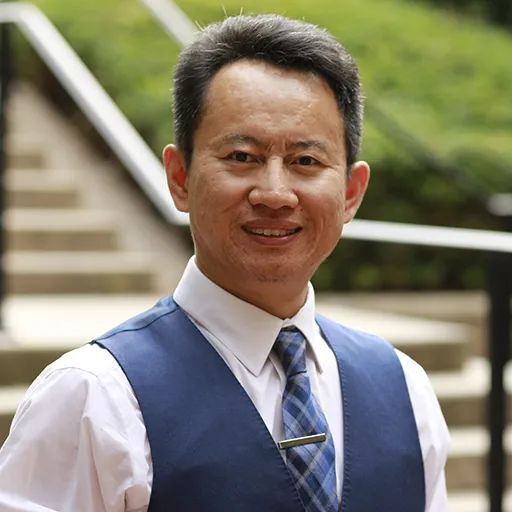
Professor Xiaoming Zhai
Professor of Science Education and AI, (courtesy) Professor of Computer Science and Statistics, Director of the AI4STEM Education Center, and Director of the National GENIUS Center
University of Georgia
USA
Xiaoming Zhai is Professor of Science Education and AI, (courtesy) Professor of Computer Science and Statistics, Founding Director of the AI4STEM Education Center, and Director of the National GENIUS Center, University of Georgia. His research pioneers the use of AI to transform science and STEM education, supported by NSF, IES, NIH, and NAEd/Spencer Foundation. He has published extensively in leading journals and premier AI and AI-in-Education venues, including Journal of Research in Science Teaching, Computers & Education, AIED, LAK, AAAI, NeurIPS, KDD, and ICLR. Dr. Zhai chaired the 2022 and 2025 International Conferences on AI in STEM education, leads NARST’s RAISE group, and has edited four books and eight special issues. His research has earned prestigious honors such as the AERA TACTL Early Career Award, Humboldt Research Fellowship, and NAEd/Spencer Award, establishing him as a leading voice in shaping the future of AI in STEM education.
Keynote Address
Advancing Discipline-based AI Literacy in Science
In this talk, Dr. Zhai will introduce a comprehensive framework for discipline-based AI literacy (DAIL), which emphasizes integrating AI competence within the context of specific subject areas such as science and engineering. Rather than treating AI as a standalone topic, DAIL focuses on helping learners meaningfully apply AI concepts to disciplinary practices, fostering deeper conceptual understanding and critical thinking. To provide concrete evidence of DAIL in action, Dr. Zhai will demonstrate a multi-agent system called GenAgent. This system is designed to actively engage students in authentic science and engineering practices, such as modeling, data analysis, and problem-solving. Through interactions with multiple intelligent agents, students collaboratively explore complex phenomena while simultaneously developing AI literacy. The talk will highlight how GenAgent supports both content learning and AI competency, offering a scalable and innovative approach to preparing students for an AI-driven future.
Pre-conference Workshop
Using GenAgent to Facilitate the Next Generation Science Learning
In this interactive workshop, Dr. Zhai will engage participants in hands-on exploration of the GenAgent system to support Next Generation Science Learning. Participants will experience how multi-agent interactions can be used to facilitate key practices such as modeling, data analysis, and evidence-based reasoning in science classrooms. The workshop will also demonstrate how GenAgent promotes discipline-based AI literacy (DAIL) by embedding AI competence within authentic scientific inquiry. Attendees will have opportunities to design, test, and reflect on learning activities that integrate AI with science instruction. By the end of the session, participants will gain practical strategies and tools to enhance student engagement, deepen conceptual understanding, and prepare learners for an increasingly AI-driven scientific landscape.
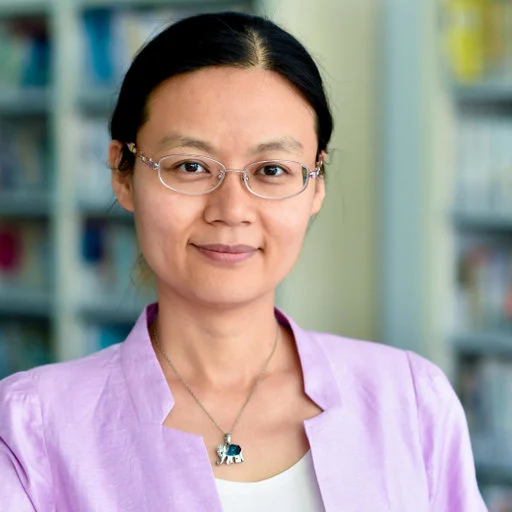
Professor Zhang Yu
Professor and Chair,
School of Education, Tsinghua University
China
Dr. ZHANG Yu is Professor and Chair of the School of Education, Tsinghua University. Her research focuses on learning sciences and future education, and educational economics, integrating interdisciplinary innovations in cognitive neuroscience and artificial intelligence. She has special interests in learning theories, educational paradigm innovation, and methodological advancements in education research. She also serves as the Vice Chairman of the Education Evaluation Professional Committee, Chinese Society of Educational Development Strategy, Executive Council Member of the Learning Sciences Branch, China Association of Higher Education, Deputy Director of the Capital Education High-Quality Development Policy Research Base, and the Program Chair of the “Brain, Neuroscience, and Education” Special Interest Group, American Educational Research Association (AERA).
Keynote Address
Future Education Paradigm in the Age of AI
Based on theoretical analysis, practical innovation and empirical evidence, I will talk about what future education may look like and how to address the concerns and challenges we are facing in education.
Pre-conference Workshop
Important Issues in Learning Sciences in the Age of AI
I would like to discuss important issues and research questions for our next step’s research in AIED, and the appropriate approach to address them. Participants are encouraged to bring your own research proposals or even just research questions to the workshop.

Assistant Professor Farhan Ali
National Institute of Education,
Nanyang Technological University
Singapore
Farhan Ali is an Assistant Professor at the National Institute of Education, Nanyang Technological University, Singapore. His research group addresses the key challenge of global declines in motivation in education by understanding and fostering curiosity in learning, self-directedness, and personal agency and impact in technology-rich environments. He leads the development and deployment of several generative AI platforms, such as TeacherGAIA and GAIA21 , that support curiosity, self-directedness, and 21 st Century competencies in over 100 schools with thousands of students. His group has published in international journals such as Computers & Education: AI, Studies in Educational Evaluation and Journal of Youth and Adolescence, and presented papers at the International Conference on Artificial Intelligence in Education and AERA. More details about the work can be found here .
Keynote Address
When Answers Are Cheap, Questions Matter More: Curiosity and Learning in AI-Dominant Education
As Generative AI makes answers increasingly cheap and easy to obtain, the challenge in education needs to shift to fostering better questioning. This keynote argues that questioning driven by curiosity is central to effective learning in digital environments. Drawing on large-scale data and our new frameworks, this keynote explores how questioning and curiosity operate and impact outcomes. This effort is crucial given evidence of how current GenAI use may narrow questioning, curiosity, and inquiry. The talk concludes with principles and interventions that can cultivate agency for deeper and broader self-directed questioning.